Reconceptualizing Podcasts as Multi-Functional Learning Media to Enhance Academic Discussions among PGMI Students
Abstract
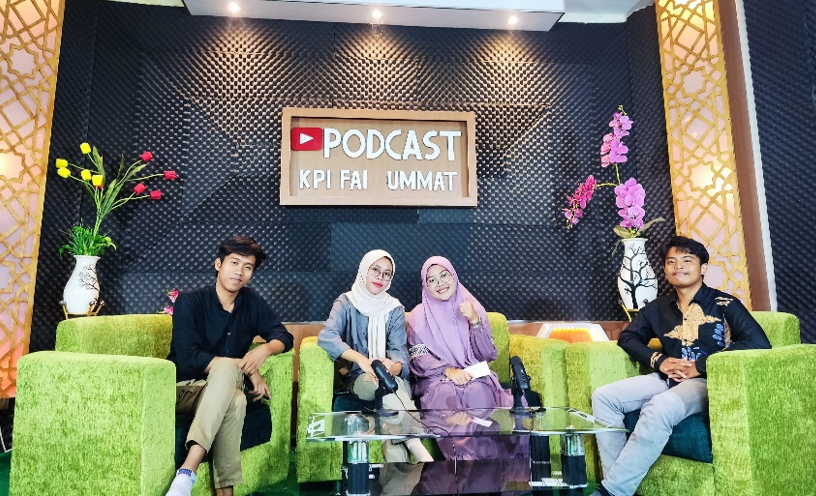
This study aims to determine the effectiveness of the use of podcasts as a source of information, interaction and education in improving the learning discussions of PGMI students in Semester V at the University of Muhammadiyah Mataram. The background of this research is the lack of students using podcasts as a source of information, interaction and education as a serious academic tool for discussions that still rely on books, and cellphones. This study uses a qualitative method of phenomenological approach, namely to understand students' subjective experiences related to the use of podcasts. The informants of this research were 4 students, then the sample determination technique was using Purposive Sampling , each cycle consisted of core stages, namely observation, interview procedures, and documentation procedures. The results of the study show that the use of podcasts as a source of information, interaction and education can actually increase the learning discussions of PGMI students. This can be an effective learning method for students. Through the podcast program, PGMI students can share information about light discussions about education. Moreover, podcasts can increase the learning flexibility of PGMI students of the University of Muhammadiyah Mataram.
References
Ahsan, Moh, Shohifur Rizal, and Saptono Hadi. “Podcast Media as an Alternative to Building Students' Communication Skills in Facing the Vuca Era.” Konis Journal: Study of Research and Thought on Islamic Broadcasters' Communication 07, no. 02 (2025): 153–65.
Amalia, Mufidah Nur. “A Literature Review: Podcast Trends as Media in Second Language Learning.” Biormatika: Scientific Journal of the Faculty of Teacher Training and Education 7, no. 2 (2021): 168–76. https://doi.org/10.35569/biormatika.v7i2.1146.
Annisa Eka Syafrina. “The Use of Podcasts as Information Media Among Students of the Faculty of Communication Sciences, Bhayangkara University, Jakarta Raya.” Journal of Communication, Society and Security 4, no. 2 (2024): 10–22. https://doi.org/10.31599/vk0z2815.
Bratadiredja, Mohammad Firmansyah, Hisam Sambadi, and Novia Trias Amanda. “Analysis of Generation Z’s Interest in Listening to Podcasts on the Spotify Music Platform.” Journal of Communication at Garut University: Results of Thought and Research 11, no. 2 (2025): 394–411.
Indahsari, Dyan. “Using Podcasts for EFL Students in Language Learning.” JEES (Journal of the English Educators Society) 5, no. 2 (2020): 103–8. https://doi.org/10.21070/jees.v5i2.767.
Indriastuti, Faiza, and Wawan Tri Saksono. “Podcasts as Audio-Based Learning Resources.” Jurnal Teknodik 18, no. 1 (2015): 304–14. https://doi.org/10.32550/teknodik.v0i0.136.
K. Perayani, and IW Rasna. “Learning Listening Skills Using Podcast Media Based On The Project Based Learning (Pjbl) Model.” Journal of Indonesian Language Education and Learning 11, no. 1 (2022): 108–17. https://doi.org/10.23887/jurnal_bahasa.v11i1.741.
Marlina, Sari. “The Effectiveness of Podcasts as a Media for Education and Public Information.” Journal of Communication and Media Studies 1, no. 1 (2025): 8–15.
Norhidayah, Siti, Salsabila Hady Ningsih, and Muhammad Rizqi. “Utilization Of Social Media As A Learning Media At The Middle School Level: A Literature Review 2020 – 2025.” Jurnal Staika: Jurnal Penelitian Dan Pendidikan 8, no. 2 (2025): 146. https://doi.org/10.62750/bgwjdt56.
Pattynama, Pricilia Claudia, Riana Sahrani, and Pamela Hendra Heng. “The Role of Self-Regulation in Learning and Academic Engagement on Intention to Withdraw with Resilience as a Mediator.” Journal of Social Sciences, Humanities, and Arts 3, no. 2 (2019): 307. https://doi.org/10.24912/jmishumsen.v1i1.5629.
Ratnawati, Santi, Mohammad Afif Syaifudin, and Abdul Hakim. “Analysis of Strategy, Challenges, and Opportunities for Da'wah Through Podcasts in.” Jurnal Janaloka 3, no. 1 (2025): 232–40.
Sudarmoyo. “Podcasts as an Alternative Medium for Distance Learning.” Edudikara: Journal of Education and Learning 5, no. 2 (2020): 65–73.
Umbar, Kisno, Hanna Tiara Lestari, Hikmad Karunia Suharso, Muhammad Fardan, and Hanif Hafawah. “YouTube-Based Arabic Language Learning: A Study on Arab Podcasts Channels.” Journal of Education and Counseling (JPDK) 5, no. 2 (2023): 917–25.
Ummah, Athik Hidayatul, M. Khairul Khatoni, and M. Khairurromadhan. “Podcast as a Da'wah Strategy in the Digital Era: Analysis of Opportunities and Challenges.” Komunike 12, no. 2 (2020): 210–34. https://doi.org/10.20414/jurkom.v12i2.2739.
Zellatifanny, Cut Medika. Trends in Disseminating Audio on Demand Content Through Podcasts: An Opportunity and Challenge in Indonesia Trends in Disseminating Audio on Demand Content . 5, no. 2 (2020): 117–32. https://doi.org/10.30818/jpkm.2020.2050202.
Copyright (c) 2025 Nurul Ramadhani

This work is licensed under a Creative Commons Attribution-ShareAlike 4.0 International License.