Application PAK RT Based Website Canva As Learning Media for Islamic Religious Education for Grade IV Elementary School
Abstract
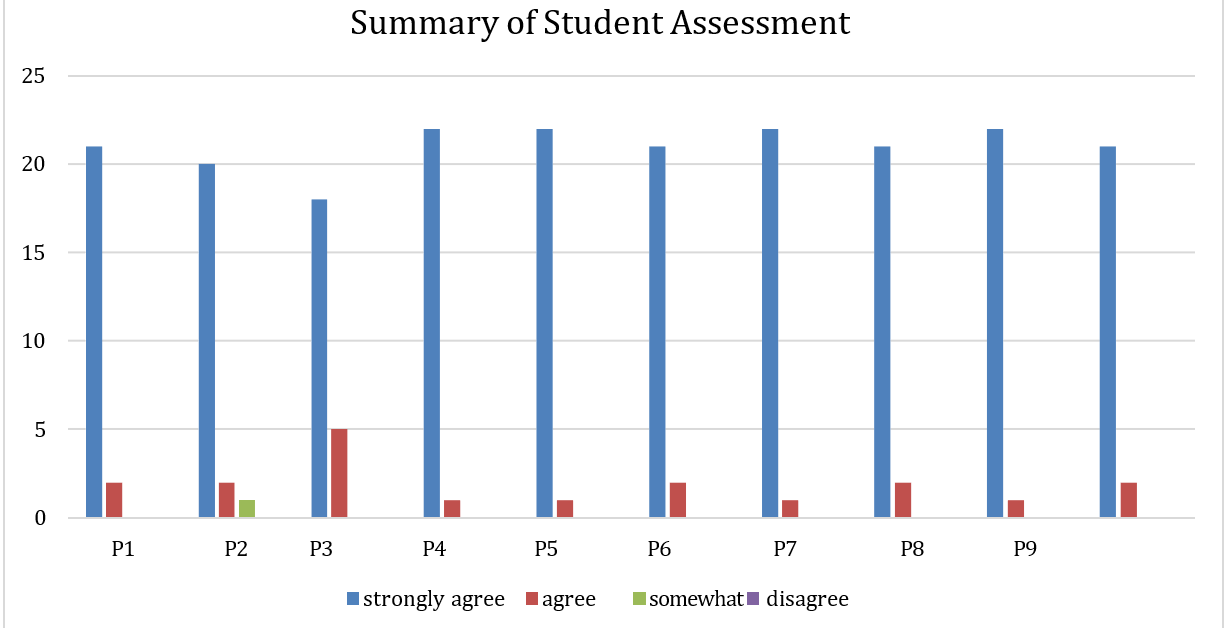
Islamic Religious Education (PAI) learning in elementary schools often faces problems such as low student participation due to traditional teaching methods that make it difficult to access abstract materials. This study aims to develop an innovative learning medium in the form of a website-based application called "PAK RT" created using the Canva platform at SDN Pakuwon 2. Employing Research and Development (R&D) with the ADDIE model, this study involved 23 fourth-grade students in a limited trial. Data were collected through observation and student perception questionnaires, then analyzed using descriptive quantitative methods. The findings indicated high levels of user acceptance and satisfaction: 91.3% of students felt more motivated to participate in learning activities, and 95.7% acknowledged that the combination of text and video greatly helped them understand the material on the history of Prophet Muhammad's preaching. However, because this study did not employ pretests, posttests, control groups, or objective learning outcome measurements, the medium is categorized as feasible and promising for enhancing student interest and participation, but not empirically proven to improve learning achievement.
Downloads
References
Ade Rahayu. (2025). Metode Penelitian dan Pengembangan (R&D): Pengertian, Jenis dan Tahapan. DIAJAR: Jurnal Pendidikan dan Pembelajaran, 4(3), 459–470. https://doi.org/10.54259/diajar.v4i3.5092
Adedoyin, O. B., & Soykan, E. (2023). Covid-19 pandemic and online learning: The challenges and opportunities. Interactive Learning Environments, 31(2), 863–875. https://doi.org/10.1080/10494820.2020.1813180
Aeni, A. N., Patmawati, P., Rizqiana, R. N., & Aulia, S. R. (2023). Penggunaan E-Book MARKIZA (Mari Kita Zakat) sebagai Media Pembelajaran PAI di Sekolah Dasar. 7. https://doi.org/10.31004/jptam.v7i1.5926
Afifah, N., Kurniaman, O., & Noviana, E. (2022). PENGEMBANGAN MEDIA PEMBELAJARAN INTERAKTIF PADA PEMBELAJARAN BAHASA INDONESIA KELAS III SEKOLAH DASAR. Jurnal Kiprah Pendidikan, 1(1), 33–42. https://doi.org/10.33578/kpd.v1i1.24
Al-Rahmi, W. M., Yahaya, N., Alturki, U., Alrobai, A., Aldraiweesh, A. A., Omar Alsayed, A., & Kamin, Y. B. (2022). Social media – based collaborative learning: The effect on learning success with the moderating role of cyberstalking and cyberbullying. Interactive Learning Environments, 30(8), 1434–1447. https://doi.org/10.1080/10494820.2020.1728342
Anderson, M., Hadi, M., & Deta, U. A. (2020). Fermat’s Principle and Hamilton’s Principle: Does a least action take a least time for happening? Journal of Physics: Conference Series, 1467(1), 012038. https://doi.org/10.1088/1742-6596/1467/1/012038
Arsyad, F., Basuki, I., & Ismayati, E. (2020). ANALISIS MEDIA PEMBELAJARAN MENGGUNAKAN SOFTWARE ELECTRICAL CONTROL TECHNIQUES SIMULATOR (EKTS) TERHADAP PENINGKATAN HASIL BELAJAR SISWA PADA MATA PELAJARAN INSTALASI MOTOR LISTRIK DI SMK. 2020. https://ejournal.unesa.ac.id/index.php/jurnal-pendidikan-teknik-elektro/article/view/34459
Bouffard, L. (2017). Ryan, R. M. et Deci, E. L. (2017). Self-determination theory. Basic psychological needs in motivation, development and wellness. New York, NY: Guilford Press. Revue québécoise de psychologie, 38(3), 231–234. https://doi.org/10.7202/1041847ar
Graham, C. R. (2006). CHAPTER 1.1 BLENDED LEARNING SYSTEMS: C. J. https://www.researchgate.net/publication/258834966_Blended_learning_systems_Definition_current_trends_and_future_directions
Guo, P. J., Kim, J., & Rubin, R. (2014). How video production affects student engagement: An empirical study of MOOC videos. Proceedings of the First ACM Conference on Learning @ Scale Conference, 41–50. https://doi.org/10.1145/2556325.2566239
Halimah, I., Maryanah, D., Nursyifa, N. N. S., & Aeni, A. N. (2025). Pengembangan E-book berbasis Canva “SUPI” tentang Surat-Surat Pendek pada Pembelajaran PAI Kelas 2 SD. Borneo Journal of Islamic Education, 5(1), 51–62. https://doi.org/10.21093/bjie.v5i1.10408
Hamid, A. (2020). PENERAPAN METODE KETELADANAN SEBAGAI STRATEGI PEMBELAJARAN UNTUK MENINGKATKAN HASIL BELAJAR PENDIDIKAN AGAMA ISLAM. 2020. https://doi.org/10.36835/al-fikrah.v3i2.70
Hasbullah, Juhji, & Ali Maksum. (2019). STRATEGI BELAJAR MENGAJAR DALAM UPAYA PENINGKATAN HASIL BELAJAR PENDIDIKAN AGAMA ISLAM. 3(1). https://doi.org/10.33650/edureligia.v3i1.859
Hobbs, R., & Tuzel, S. (2017). Teacher motivations for digital and media literacy: An examination of T urkish educators. British Journal of Educational Technology, 48(1), 7–22. https://doi.org/10.1111/bjet.12326
Hwang, G.-J., & Tu, Y.-F. (2021). Roles and Research Trends of Artificial Intelligence in Mathematics Education: A Bibliometric Mapping Analysis and Systematic Review. Mathematics, 9(6), 584. https://doi.org/10.3390/math9060584
Kalogiannakis, M., & Papadakis, S. (Ed.). (2020). Handbook of Research on Tools for Teaching Computational Thinking in P-12 Education: IGI Global. https://doi.org/10.4018/978-1-7998-4576-8
Mayer, R. (2020). Multimedia Learning (3 ed.). Cambridge University Press. https://doi.org/10.1017/9781316941355
Mayer, R. E. (2009). Multimedia Learning (2 ed.). Cambridge University Press. https://doi.org/10.1017/CBO9780511811678
Mayer, R. E. (2017). Using multimedia for e‐learning. Journal of Computer Assisted Learning, 33(5), 403–423. https://doi.org/10.1111/jcal.12197
Mayer, R. E., & Fiorella, L. (Ed.). (2021). The Cambridge Handbook of Multimedia Learning (3 ed.). Cambridge University Press. https://doi.org/10.1017/9781108894333
Nurrita, T. (2018). PENGEMBANGAN MEDIA PEMBELAJARAN UNTUK MENINGKATKAN HASIL BELAJAR SISWA. MISYKAT: Jurnal Ilmu-ilmu Al-Quran, Hadist, Syari’ah dan Tarbiyah, 3(1), 171. https://doi.org/10.33511/misykat.v3n1.171
Prastowo, Andi. (2019). Analisis Pembelajaran Tematik Terpadu. Kencana. https://books.google.co.id/books?id=jeCxDwAAQBAJ
Putri, R. A., & Handayani, S. L. (2021). Pengembangan Media SiMach Land Berbasis Android di Sekolah Dasar. Jurnal Basicedu, 5(4), 2541–2549. https://doi.org/10.31004/basicedu.v5i4.1230
Rachman Arif, E. Yochanan., Andi Ilham Samanlangi, & Hery Purnomo, S.E., M.M. (2024). METODE PENELITIAN KUANTITATIF, KUALITATIF DAN R&D (Cetakan Pertama). CV Saba Jaya Publisher.
Rahmawati & Andaryani. (2025). Pengembangan Multimedia Interaktif ‘Rama Jaka’ untuk Meningkatkan Motivasi Belajar Siswa pada Pembelajaran IPA Kelas V. 8. https://doi.org/10.54371/jiip.v8i5.7963
Ryan, R. M., & Deci, E. L. (2000). Intrinsic and Extrinsic Motivations: Classic Definitions and New Directions. Contemporary Educational Psychology, 25(1), 54–67. https://doi.org/10.1006/ceps.1999.1020
Safitri, A., Wulandari, D., & Herlambang, Y. T. (2022). Proyek Penguatan Profil Pelajar Pancasila: Sebuah Orientasi Baru Pendidikan dalam Meningkatkan Karakter Siswa Indonesia. Jurnal Basicedu, 6(4), 7076–7086. https://doi.org/10.31004/basicedu.v6i4.3274
Sari, L. S., & Fatonah, S. (2022). Pengaruh Media Pembelajaran Berbasis Aplikasi Canva terhadap Motivasi dan Hasil Belajar IPA Siswa Kelas IV. 6. https://doi.org/10.31004/jptam.v6i1.3184
Stanković, Z., Maksimović, J., & Osmanović, J. (2018). Cognitive theories and paradigmatic research posts in the function of multimedia teaching and learning. International Journal of Cognitive Research in Science Engineering and Education, 6(2), 107–114. https://doi.org/10.5937/ijcrsee1802107S
Sudjana, Nana & Rivai, Ahmad. (2015). Media Pengajaran. Sinar Baru Algensindo. https://opac.perpusnas.go.id/DetailOpac.aspx?id=113779
Susilawati, T. & Rusdinal. (2022). PENGEMBANGAN MEDIA PEMBELAJARAN E-BOOK BERBASIS BLENDED LEARNING TEMATIK TERPADU DI KELAS IV SEKOLAH DASAR. Jurnal Cakrawala Pendas, 8(2), 378–387. https://doi.org/10.31949/jcp.v8i2.2285
Sweller, J. (2020). Cognitive load theory and educational technology. Educational Technology Research and Development, 68(1), 1–16. https://doi.org/10.1007/s11423-019-09701-3
Trust, T., & Whalen, J. (2020). Should Teachers be Trained in Emergency Remote Teaching? Lessons Learned from the COVID-19 Pandemic. Journal of Technology and Teacher Education, 28(2), 189–199. https://doi.org/10.70725/307718pkpjuu
Copyright (c) 2026 Diva Aura, Muhammad Reihanul Ilham, Yasmin Shabirah, Ani Nur Aeni

This work is licensed under a Creative Commons Attribution-ShareAlike 4.0 International License.