Problem Based Learning Strategy Models at Islamic Universities
Abstract
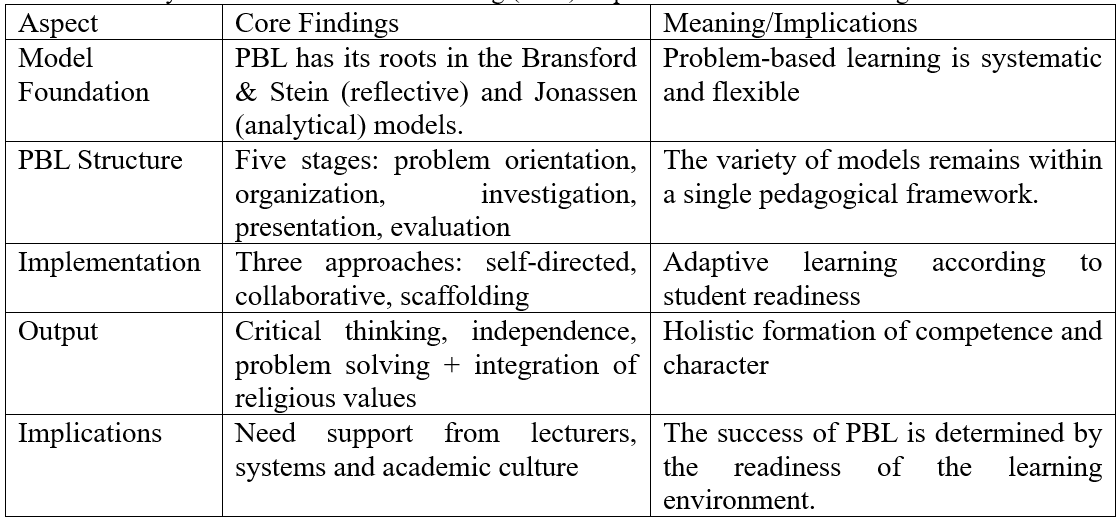
This paper aims to analyze Problem-Based Learning (PBL) learning strategy models in Islamic universities. This study uses a qualitative method with a literature study approach, then analyzed starting from data reduction, data presentation, and drawing conclusions. To ensure valid data, this study uses source triangulation to find different gaps while obtaining accurate and consistent data. The findings indicate that the PBL learning model in Islamic universities is rooted in two main frameworks: the Problem-Based Learning model by Bransford and Stein and the Problem-Solving Learning model of the troubleshooting type proposed by David H. Jonassen. In its implementation, both models develop adaptively through self-directed learning, collaborative, and scaffolding approaches. Furthermore, this study provides a new contribution by showing that the implementation of PBL in Islamic universities is not only oriented towards cognitive aspects, but also integrates religious and ethical values in the learning process. These findings confirm that PBL is a flexible, contextual learning model, and has great potential in developing critical and reflective thinking skills, while also shaping students' character holistically.
References
Alaika M. Bagus Kurnia PS, Sutikno, Dwi Erlindatur Rohmah. “Implementation of Problem Based Learning Model in Improving Scientific Literacy Culture of PAI Students of UIN Sunan Aampel Surabaya.” JDPP Journal of Dimensions of Education and Learning 11, no. 1 (2023): 195–205. https://doi.org/10.24269/dpp.v11i1.8417
Nerlvianti, et all. “Characteristics of Problem Based Learning Model Assisted by Rumah Belajar E-Learning Portal in Thematic Science Learning, Padang State University.” Journal of Educational Pedagogy , no. 02, Volume. 18 (nd).
Alvida, M, and et al. “Using Problem Based Learning (PBL) Learning Model to Improve Learning Outcomes of Fifth Grade Elementary School Students, Padang State University.” Journal of Elementary School Learning Innovation , no. 03, Volume. 11 (nd).
Ariz, Surya, and et al. “Using Problem Based Learning (PBL) Method Assisted by Audio Visual Method to Improve Mathematics Learning Outcomes of Elementary School Students, UKS Wacana.” Journal of Elementary Education , no. 02, Volume. 04 (nd).
Astutik, Erna Wiji, Jusniar, and Masniaturofikoh. “Efforts to Increase Interest and Science Learning Outcomes Efforts to Increase Interest and Science Learning Outcomes Through Problem Based Learning Model.” Educational Profession 2, no. 1 (2021): 115–26.
Auliah, Fitria Nur, Natasya Febriyanti, and Tin Rustini. “Analysis of Teachers’ Obstacles in Implementing Problem Based Learning Model in Social Studies Learning for Grade IV at SDN 090 Cibiru Bandung.” Journal on Education 05, no. 02 (2023): 2025–33.
Buyung, Buyung, and Alexon Alexon. “Implementation of Problem Based Learning (PBL) Learning Model to Improve Student Learning Achievement.” Scientific Journal of Batanghari Jambi University 22, no. 1 (2022): 100. https://doi.org/10.33087/jiubj.v22i1.2064
Beni Adam, et al., Implementation of Project Based Learning Model Using Sketchup Media in Construction and Building Utilities Subject for Class XI at SMK Negeri 2 Bojonegoro . Surabaya State University, Journal, and
Fahrurrozi, Yofita Sari, Stiany Shalma. “Literature Study: Implementation of the Drill Method to Improve Elementary School Students' Mathematics Learning Outcomes.” Edukatif: Journal of Educational Sciences 4, no. 3 (2022): 4325–36.
Fatimah, et all, Learning and Teaching Strategies in Improving Language Skills, and Indraprasta PGRI University. “No Title.” Indonesian Language and Literature Education Journal , no. 02, Volume. 01 (nd).
Khairunnisa, et al. “Problem Based Learning: Concept, Characteristics, and Foundations in Building 21st Century Competencies.” Journal of Edu Research Indonesian Institute for Corporate Learning and Studies (IICLS) 6, no. 1 (2025): 2330–38.
Malikha, Dyan Rifiana. “PBL (Problem Based Learning) Learning Strategy as a Character-Based and Globally Insightful Learning Method.” In the 4th National Seminar on Citizenship Education , nd
Marisha Silta Fany, Willyansah. “Problem-Based Learning (PBL) as an Innovative Learning Strategy in Improving Students’ Cognitive Learning Outcomes in Biology Class XI.A2 of SMA Negeri 9 Pekanbaru.” Journal of Aerospace Education 2, no. 1 (2025): 29. https://doi.org/10.17977/um064v5i42025p476-484
Mayasari, Annisa, Opan Arifudin, and Eri Juliawati. “Implementation of Problem Based Learning (PBL) Model in Improving Learning Activeness.” Tahsinia Journal 3, no. 2 (2022): 167–75. https://doi.org/10.57171/jt.v3i2.335
Muliaan, BZN, MH Ch Pandowo, and Mintardjo. “Evaluation of Reward Implementation on Employee Performance Improvement at Tepi Pantai Restaurant.” Jurnal Emba 12, no. 01 (2024): 145–50.
Mutia Riau Mita, KMA Fauzi. “The Effectiveness of the Problem-Based Learning (PBL) Model in Improving Critical Thinking Skills of Grade VI Students of Sdn 001 Bagan Batu City.” Pendas: Scientific Journal of Elementary Education, 10, no. 04 (2025): 230–43.
Nafisah Mala, Mu'tafi Ali, and Munawaroh Hidayat. “Implementation of Problem Based Learning (PBL) Model in Cultivating the Learning Spirit of Grade X Students in Aqidah Akhlak Learning at MA Takhassus Al-Qur'an 1 Mojotengah.” Jurnal Sains Student Research 3, no. 4 (2025): 736–46.
Nisa, Khoirun, and et al. “Problem Based Learning Model in Indonesian Language Subject Content in Elementary Schools, PGRI Semarang University.” Jurnal Education , no. 02, Volume. 09 (nd).
Nisaul Barokati Selirowangi, Nur Aisyah, Lailatur Rohmah, and 1. “Implementation of Problem Based Learning Model to Improve Higher Order Thinking Skills (HOTS).” EDUKASIA: Journal of Education and Learning 5, no. 2 (2024): 32–40. https://doi.org/10.37304/jptm.v6i2.19693
Nurfajriani, Wiyanda Vera, Muhammad Wahyu, Ilhami Arivan, Rusdy Abdullah Sirodj, and M Win Afgani. “Data Triangulation in Qualitative Data Analysis.” Wahana Pendidikan Scientific Journal 10, no. 17 (2024): 826–33.
Nurlina Ariani Hrp, et al. Learning and Teaching . I. Bandung: Widina Bhaktii Persada, 2022.
Octavia, Shilphy A. Learning Models, Cet . I, Yogayakarta: Deepublish, nd
Purwanto, Yohanes, Indah Wahyu, Puji Utami, and M Hari Efendi. “Integration of Problem Based Learning and ZPD-Based Scaffolding on Prehistoric Cultural Material.” Journal of Language, Literature, and Arts 5, no. 4 (2025): 476–84. https://doi.org/10.17977/um064v5i42025p476-484
Purwati, Shovia Wahyu. “Problem Based Learning Model Learning Method in Improving 21st Century Skills of Students of SMPN 1 Kedungpring Lamongan, SMPN 1 Kedungpring Lamongan.” Journal Of Social Science And Education , no. 02, Volume. 03 (nd).
Riyanto, Muhamad, Masduki Asbari, and Dahru Latif. “The Effectiveness of Problem Based Learning on Students’ Critical Thinking Skills.” Journal of Information Systems and Management 03, no. 01 (2024): 1–5.
Sayrifuddin, K, SMK Learning Model with a Scientific Approach to Islamic Religious Education and Character Education Subjects, and Jambi. “No Title.” Journal of Islamic Education Students , no. 01, Volume. 01 (nd).
Taty Sulastry, et al. “The Effectiveness of Problem Based Learning Model on Acid-Base Material to Improve Student Learning Outcomes.” Indonesian Journal of Science Education 11, no. 1 (2023): 142–51.
Thomas Kemil Masi, Marai G. Moy., et al. “Efforts to Increase Student Participation Through Problem Based Learning Planning Analysis by PPKn Lecturers.” JPK (Jurnal Pancasila and Citizenship) 11, no. 1 (2026): 137.
Uyun, Roudotul. “The Effectiveness of Problem Based Learning Model in Improving Students’ Critical Thinking Skills.” Basicedu Journal 9, no. 2 (2025): 393–400.
Copyright (c) 2025 Siti Nurbaya

This work is licensed under a Creative Commons Attribution-ShareAlike 4.0 International License.